


Metal Roofing Sydney: The Complete Repair, Restoration & Cost Guide (2026)
By Able Roof Restoration | Licensed & Fully Insured | Servicing All Sydney Metro Areas
Let’s be honest — most Sydney homeowners don’t think about their roof until water starts dripping onto the lounge room carpet. Or worse, until they spot rust the size of a dinner plate creeping across the Colorbond sheets. At that point, it stops being “something to deal with later” and becomes an emergency.
If your metal roof is showing its age — rust spots, faded paint, dodgy flashings, or leaks that only appear during those biblical summer downpours — this guide is for you. We’re going to walk you through everything: how to spot damage early, exactly what the repair and restoration process involves, what it’s going to cost you in 2026, and how to get the best value out of your roofing dollar in Sydney.
No fluff. No jargon. Just straight-talking, practical advice from a team that’s been working on Sydney roofs for over 15 years.
Why Sydney Is Absolutely Brutal on Metal Roofs
Before we get into repairs, it’s worth understanding why Sydney metal roofs age the way they do — because the conditions here are genuinely tough.
Sydney averages more than 2,600 hours of sunshine per year. On a 40°C western Sydney summer day, the surface temperature of a Colorbond roof can hit 70°C or higher. That kind of thermal expansion and contraction — repeating cycle after cycle, year after year — causes fastener holes to slowly elongate, flashings to pull away from their seals, and protective coatings to crack and degrade. Add salt air for homes within a few kilometres of the coast (think Bondi, Cronulla, Manly, Cronulla), and you’ve got an accelerant for corrosion that can fast-track a healthy roof to a rusty mess.
And then there’s the storms. Sydney copped 47 severe storm events across the greater metro area in 2024 alone — each one capable of lifting flashing, cracking panels, blocking gutters, and sending water into roof cavities that look perfectly fine from the street.
That’s why roof maintenance isn’t optional in Sydney — it’s essential. A bit of preventative attention every year or two can save you thousands down the track.
Is Your Metal Roof Telling You Something? Warning Signs to Watch For
You don’t need to be a tradie to spot the early signs of metal roof trouble. Here’s what to look for:
Rust spots or staining. Even small orange-brown patches are worth taking seriously. Surface rust spreads quickly in Sydney’s humid summers, and what starts as a cosmetic issue can eat through sheet metal within a few years if left alone.
Fading or peeling paint. When the protective coating breaks down, the bare metal underneath is directly exposed to UV and moisture. Faded colour is cosmetic; peeling paint is a structural warning.
Leaks after rain. Obvious, yes — but plenty of homeowners assume a leak is a minor drip and leave it for months. In that time, water can penetrate roof battens, insulation, and ceiling cavities. If you’ve got a water stain on the ceiling, act now.
Loose or missing fasteners. Old galvanised screws on pre-2000s Colorbond roofs are notorious for rusting out, leaving the roof sheet with nothing properly holding it down. In a storm, that’s a serious problem.
Damaged or deteriorating flashings. The metal strips around your chimney, skylights, and roof edges are the most common leak entry points. UV degrades the sealants in 7–10 years — and Sydney’s heat cycles accelerate that timeline significantly.
Sagging gutters or blocked downpipes. Your gutter system is directly connected to your roof’s health. Blocked gutters cause water to back up under the roof edge, and that’s a fast track to rot and rust.
Not sure what type of metal roof you’ve got or what conditions apply? Our roof style guide covers the most common types across Sydney homes.
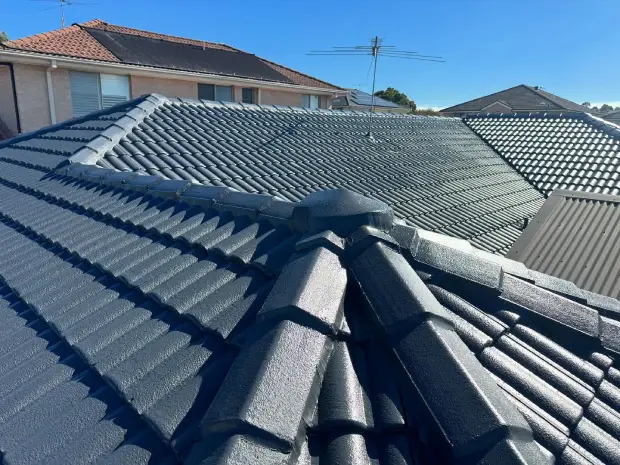
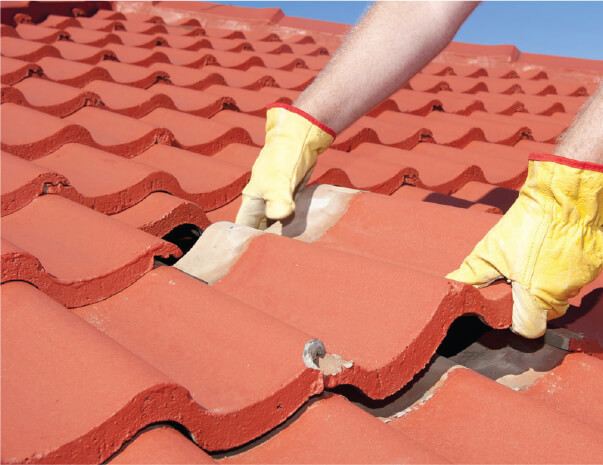
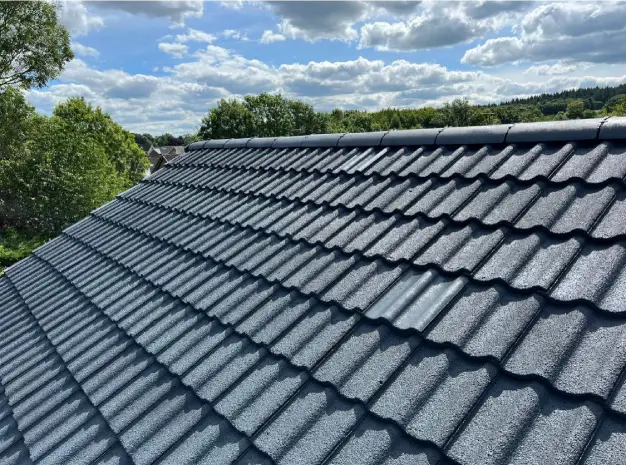
How to Repair a Metal Roof in Sydney: The Step-by-Step Process
This is the bit most roofing blogs skip over or bury in vague descriptions. Here’s actually what happens when a professional metal roofing team shows up to repair your roof.
Step 1: Thorough Inspection
A proper job starts on the roof, not over the phone. A licensed inspector looks at every sheet, every fastener, every flashing, and every penetration point. They’re checking for hidden rust (not just surface staining), panel integrity, structural damage to battens, and the condition of the waterproof seals. Photos are taken throughout.
This inspection determines whether you’re looking at a targeted repair, a full restoration, or — in serious cases — a replacement. An honest inspector will tell you straight. If restoration will do the job, that’s what should be recommended.
Step 2: High-Pressure Cleaning
Before any repair work starts, the entire roof surface is cleaned with high-pressure water to strip off dirt, lichen, algae, moss, and loose debris. This step is non-negotiable — applying coatings or sealants over a dirty surface is like painting over rust. It looks fine for six months, then falls apart.
For a standard Sydney home, this typically takes one to two days depending on roof size and how much biological growth has built up.
Step 3: Rust Treatment and Panel Repairs
Any identified rust is treated with a rust converter — a chemical solution that neutralises the corrosion and converts iron oxide into a stable compound that can be primed over. For pitted rust (where corrosion has actually eaten through the sheet metal), panel replacement may be required.
Loose or corroded fasteners are replaced with new hex-head screws fitted with neoprene washers — these create a proper weather seal around the penetration point. Loose sheets are re-secured, and any structurally compromised panels are swapped out.
Step 4: Flashing Repair and Resealing
This is where a lot of leaks actually originate. Flashings around chimneys, skylights, roof edges, and wall junctions are inspected and resealed — or replaced entirely if they’ve deteriorated beyond repair. A polyurethane or silicone sealant rated for Australian UV conditions is applied, and all laps and penetration points are checked.
Step 5: Priming
A rust-inhibiting primer is applied across the entire roof surface before any topcoat goes on. This isn’t just about adhesion — it creates a barrier that prevents moisture and oxygen from reaching the metal, stopping rust from restarting after the initial treatment. Skipping the primer coat is a shortcut that some cheaper operators take. Don’t let them.
Step 6: Topcoat Application
Two coats of quality roof membrane are applied — typically products like Dulux AcraTex or WeatherShield, which are specifically formulated for Australian UV conditions. These products restore weather resistance, add colour, and provide a protective finish that’s rated to last 10–15 years.
You can also use this stage to update your roof’s colour. Modern Colorbond colours like Monument, Woodland Grey, Surfmist, and Shale Grey can give an older home a completely fresh look.
The whole topcoat process, including cure time between coats, typically takes two to three days. Most homeowners can stay in the house throughout — the crew works from outside.
Want to understand how all this fits into your roof’s broader structure? Our guide to understanding your roof structure is worth a read before you talk to any contractor.
Metal Roof Restoration vs. Repair vs. Full Replacement: Which Do You Actually Need?
This is the question that trips most people up — and it’s where dodgy operators can upsell you into spending more than you need to.
Here’s a straightforward breakdown:
Targeted roof repair is for isolated issues: a handful of corroded fasteners, a single damaged panel, a failed flashing around a skylight. If the rest of the roof is structurally sound and the protective coating is still doing its job, spot repairs are all you need. Cost: typically $500–$2,500 depending on scope.
Full metal roof restoration is for roofs that are aging across the board — widespread surface rust, faded or cracking paint, degraded sealants, and general weathering — but where the underlying structure is still sound. Restoration cleans, treats, repairs, primes, and recoats the entire roof. It’s the right call when individual repairs no longer make economic sense, but full replacement would be overkill. A professional roof restoration in Sydney extends your roof’s life by 10–15 years at roughly one-third the cost of replacement.
Full replacement is the call when the roof has reached end-of-life: widespread pitted rust that has eaten through the metal, structural damage to the batten framework, or a roof that has simply had too many patch jobs and is no longer worth restoring. It’s the most expensive option, but sometimes the right one.
The golden rule: if restoration will do the job, restoration is what you should get. If a roofer is pushing you towards a full replacement on a structurally sound roof, get a second opinion.
Metal Roof Restoration Cost in Sydney: What to Budget in 2026
Let’s talk numbers — because this is what everyone actually wants to know.
Metal roof restoration in Sydney generally costs $3,500 to $12,000 for a standard residential home, depending on roof size, current condition, accessibility, and the quality of materials used. Here’s how that breaks down in practical terms:
Small roof (under 120m²): $3,500–$6,000 Average home (150–200m²): $6,000–$9,000 Larger home (200m²+) or complex roofline: $9,000–$12,000+
Coastal suburbs like Manly, Cronulla, and Bondi sit at the higher end of those ranges — salt air accelerates corrosion, so more prep work is involved and specialist coatings (polyurethane topcoats with zinc-rich primers) are required.
A few things that can push the cost up:
- Extensive rust damage requiring panel replacement rather than treatment
- Multi-storey homes where additional safety equipment is needed (add 15–25%)
- Difficult roof access — restricted sites or steep pitches
- Premium coating systems like Dulux Acratex, which cost more upfront but carry 10–12 year warranties
Compare that to a full Colorbond replacement, which typically runs $15,000–$28,000 installed for a residential Sydney home. If your roof is structurally sound, restoration at one-third the price is almost always the smarter financial decision.
Be cautious of quotes that are dramatically lower than these ranges. Suspiciously cheap jobs often mean skipped primer coats, inferior paints without UV ratings, or surface-only cleaning that doesn’t address underlying rust. A year later, you’re calling someone else to fix what the budget operator ignored.
Contact Us Now
For a free, no-obligation quote on your specific roof, get in touch with the team at Able Roof Restoration.
The Affordable Metal Roofing Sydney Guide: Getting Value Without Getting Burnt
“Affordable” doesn’t mean cheapest. It means getting the best outcome for your money. Here’s how to do that.
Get at least three quotes. Make sure each quote is itemised — cleaning, rust treatment, panel repairs, primer coat, topcoat (two coats minimum), and materials specified by brand. If a quote just says “restoration — $X,” that’s not a quote, that’s a guess.
Ask about the coating system. Quality products like Dulux AcraTex come with manufacturer warranties. Ask which specific product is being used and what its rated lifespan is in Australian conditions.
Check the licence. In NSW, all roofing contractors must hold a valid contractor licence issued by NSW Fair Trading. Check it at the Service NSW website before signing anything.
Don’t defer. This is the biggest cost mistake Sydney homeowners make. A small rust patch treated today costs a fraction of a panel replacement next year. A failing flashing resealed now prevents a $15,000 ceiling repair later. Regular roof maintenance is always cheaper than reactive repairs.
Combine jobs where possible. If your gutters need work at the same time as your roof, doing them together saves on mobilisation costs. Our team handles gutter repairs and replacement alongside all roofing work — and if your driveway’s looking tired, we can sort driveway cleaning at the same time.
Colorbond vs. Zincalume: Which Metal Roof Is Right for Sydney Homes?
If you’re looking at a full replacement — or choosing materials for a new build or renovation — here’s the honest comparison.
Colorbond is the premium product and the one most suited to Sydney’s conditions. It’s a BlueScope Steel product with a baked-on paint finish in a wide range of colours, and it incorporates Thermatech solar reflectance technology that meaningfully reduces heat absorption. In Sydney’s 40°C-plus summers, that translates to real cooling cost savings. It also handles coastal salt air and UV significantly better than older materials. A Colorbond roof properly installed and maintained should last 40–50 years.
Zincalume is more cost-effective upfront. It’s a zinc-aluminium alloy coating over steel, without the coloured finish — it has a distinctive bright metallic look that dulls over time. It’s suited to certain applications but generally considered less ideal for residential roofing in coastal Sydney suburbs, where the salt air demands more corrosion resistance.
For most Sydney homeowners — especially in coastal areas, western Sydney, or anywhere with extreme summer temperatures — Colorbond is the better long-term investment even if it costs a bit more upfront.
Maintaining Your Metal Roof: What to Do Between Professional Services
Once your roof has been restored or repaired, here’s how to protect that investment:
Annual inspection. Walk the perimeter of your house once a year (safely from the ground, or from an upstairs window with binoculars) and look for obvious signs of damage — rust stains in the water running from the roof, displaced flashing, debris buildup. Get a professional up there every two to three years for a thorough inspection.
Keep your gutters clear. Blocked gutters force water to sit against the roof edge and pool where it shouldn’t. Clean them at minimum twice a year — more if you have trees overhanging the roof. Understanding how your gutter system works helps you spot problems before they escalate.
Trim overhanging trees. Branches scraping across Colorbond scratch the protective coating, and leaf debris in gutters accelerates gutter corrosion.
Address fastener rust early. If you spot rust streaks running down from individual screw points, that’s a classic sign of corroded fasteners. It’s a relatively inexpensive fix when caught early.
For coastal homes — more frequent attention. If you’re within a kilometre or two of the coast, inspect more often and expect to need touch-up work every eight to ten years between full restorations.
Our comprehensive roof guides cover maintenance schedules, seasonal checks, and everything in between for Sydney homeowners.
Why Choose Able Roof Restoration for Metal Roofing in Sydney?
Able Roof Restoration has been working on Sydney roofs for over 15 years, servicing the full metro area including the North Shore, Inner West, Western Sydney, Eastern Suburbs, and surrounding regions.
Here’s what that means in practice:
We use Dulux and Shieldcoat products — quality materials from brands with a proven track record in Australian conditions. We’re not mixing some cheap knockoff in a shed.
We’re fully licensed and insured, carrying $10 million in public liability coverage. In an industry where under-the-radar operators are unfortunately common, that matters.
We offer a complete range of services — from roof restoration and roof repairs to roof painting, roof cleaning, and gutter work — so you’re not managing five different contractors.
We provide a 24/7 emergency service. If you’ve got a fault in your roof after a storm at 10pm on a Thursday, we’re reachable. Getting it sorted fast matters, and putting your mind at rest while you wait for the repair matters just as much.
We also back our work with a Dulux 10-Year Warranty on applicable restoration jobs — because if we’re confident in the work, we should be happy to put it in writing.
Ready to Get Your Metal Roof Sorted?
If your metal roof is showing any of the signs discussed in this guide — or if it’s been more than a few years since anyone’s had a proper look at it — now is the time to act. Small problems are cheap. Big problems are expensive. That’s just how roofs work.
Get a free quote and inspection from Able Roof Restoration — no pressure, no obligation, just a straight assessment of what your roof needs and what it’s going to cost.
Call 0475 000 555 or head to ableroofrestoration.com.au to book your free roof inspection today.
Related reading:
- A New Look System: The Full Roof Restoration Process Explained
- Roof Restoration Sydney: Everything You Need to Know
- Know Your Gutter System
- Understanding Your Roof Structure
Able Roof Restoration services all Sydney metropolitan suburbs including the North Shore, Wahroonga, Cremorne, Greenwich, Ryde, St Ives, Ermington, Castlecag, and surrounding areas. Licence No. 287733c.
